
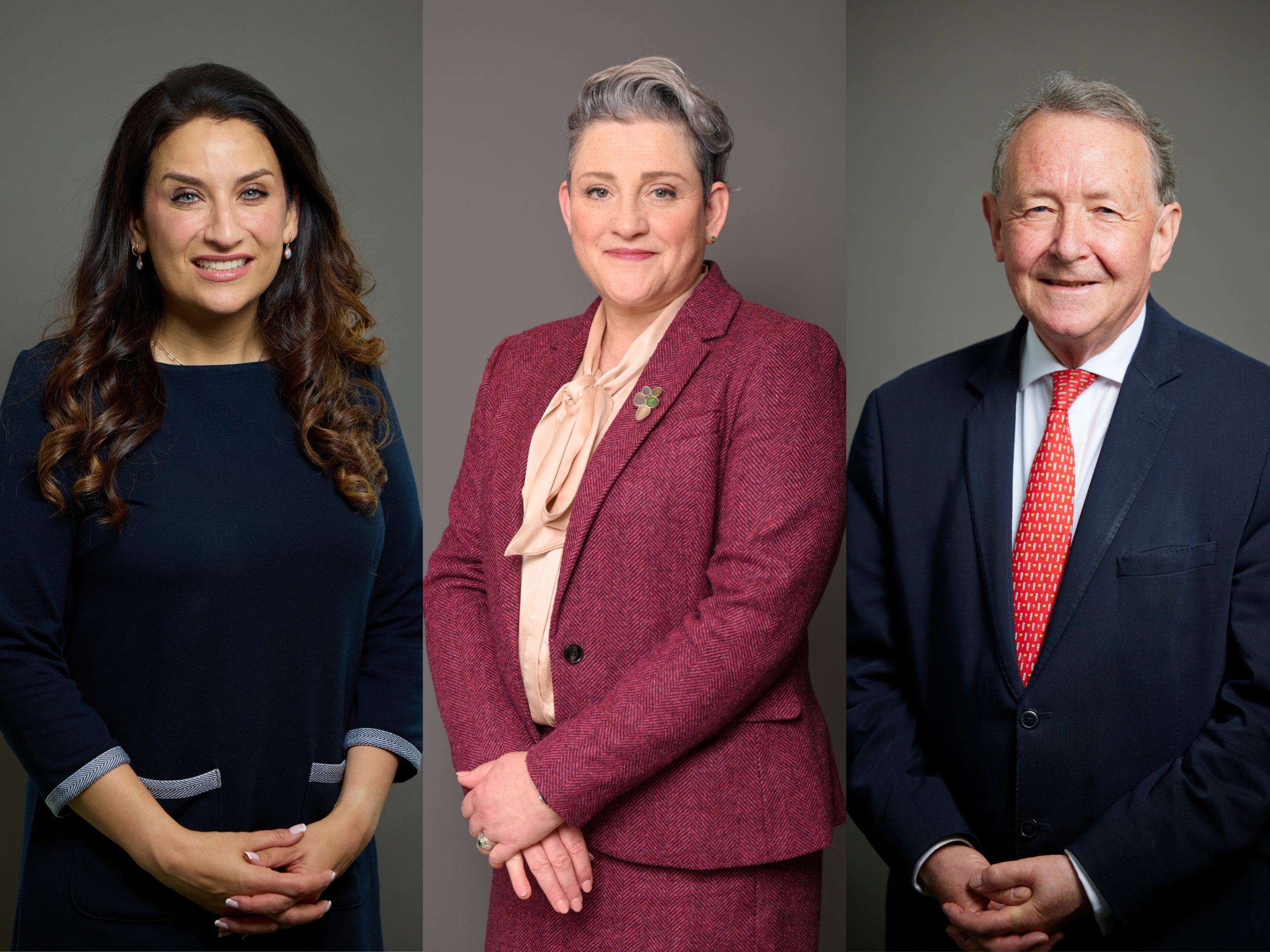
This morning (Thursday 21 May 2026), Deputy Commons Speaker Nusrat Ghani drew the names of 20 MPs who will have a chance to bring forward Private Member’s Bills in the new session of Parliament. 485 MPs put their names in, the most in 10 years, and in a reflection of the Leadbeater Bill’s razor-thin majority at Third Reading last year, today’s list is split evenly: ten voted for the Bill (in bold below) and ten voted against. The first seven are guaranteed a day’s debate; all 20 successful MPs will introduce their chosen Bills to the Commons on Wednesday 17 June.
- Sir Desmond Swayne, New Forest West (Conservative)
- Lauren Edwards, Rochester and Strood (Labour)
- Mike Wood, Kingswinford and South Staffordshire (Conservative)
- Andrew George, St Ives (Liberal Democrat)
- Dr Luke Evans, Hinckley and Bosworth (Conservative)
- Sir John Whittingdale, Molden (Conservative)
- Jessica Toale, Bournemouth West (Labour)
- Dr Neil Shastri-Hurst, Solihull West and Shirley (Conservative)
- Gareth Snell, Stoke-on-Trent Central (Labour)
- Lincoln Jopp, Spelthorne (Conservative)
- Patricia Ferguson, Glasgow West (Labour)
- Robert Jenrick, Newark (Reform UK)
- Damian Hinds, East Hampshire (Conservative)
- Alistair Strathern, Hitchin (Labour)
- Clive Jones, Wokingham (Liberal Democrat)
- Victoria Atkins, Louth and Horncastle (Conservative)
- Munira Wilson, Twickenham (Liberal Democrat)
- Steff Aquarone, North Norfolk (Liberal Democrat)
- Mr Paul Foster, South Ribble (Labour)
- David Pinto-Duschinsky, Hendon (Labour)
Kim Leadbeater topped the ballot in 2024, allowing her to bring forward the Terminally Ill Adults (End of Life) Bill; it finally fell when the last session of Parliament ended last month, and she and her allies have been clear in their strategy:
- They hope a colleague drawn in the ballot will revive her bill
- They intend to use the Parliament Acts to override the House of Lords
- Since the Parliament Acts can only be used to pass a bill in the same form as it was passed by the Commons but rejected by the Lords in the previous session, they envisage packing the Bill Committee with supporters to avoid the Bill being amended.
Why should they NOT do this?
The public say no
- Just 29% support the Leadbeater Bill being revived quickly and without change. 53% either want no new bill (19%) or want stronger safeguards (37%). (More in Common, April 2026)
- 68% of decided voters say the House of Lords must not be steamrolled by parliamentary procedures if safety concerns remain unaddressed. (Whitestone Insight, February 2026)
- In a country where one-in-three don’t get the end of life care and support they need, two thirds (67%) say “it is essential that high-quality hospice and/or palliative care is universally available before any assisted suicide laws are passed”; just one-in-six (17%) disagree. (Whitestone Insight, February 2026)
Parliamentarians say no
Polling of MPs in February and March (Whitestone) found that:
- Only 4 in 10 MPs can be relied upon to vote for the Leadbeater Bill again
- 61% of MPs recognise the Lords’ constitutional right to block the legislation
- Half of all MPs (49%) fear the Bill will lead to pressure on elderly and disabled people
Labour MP Ashley Dalton (pictured above, centre) told The Guardian yesterday that during the Commons debates on the Leadbeater Bill, she “hadn’t gone public with my diagnosis at that stage, but I was dealing with it. I’d had surgery. I knew that I had an incurable cancer… [and] I did find it difficult when people said: ‘I’ve got first-hand experience of this’ and then told a very secondhand experience.” She said “a lot of amendments were rejected that I think could have made it a lot stronger,” and “I think it’d be really foolish to be honest, to bring back something as a private member’s bill that has been so difficult, so divisive and so complicated… It is our responsibility of members of the Houses of Parliament to make good law. And that means detail, it means specifics. It means making sure that what we do doesn’t have unintended consequences that affect some of the most vulnerable people.”
Writing in LabourList today, Baroness Berger (pictured above, left) stresses that “the Assisted Dying Bill did not fall because of a couple of peers. It fell after over 60 peers placed amendments, many of which were based on the evidence of professionals, that exposed its many fundamental weaknesses. It fell because after days of debate with more than 130 peers speaking, supporters of the Bill in the Lords refused to accept any meaningful changes.”
Lord Alton, Chair of the Joint Committee on Human Rights (pictured above, right), argues in The Critic that proponents’ strategy for forcing the Bill through is fundamentally wrong: “the Bill’s demise came hard on the heels of a vote in the Scottish Parliament to reject similar legislation… Only seven Bills have ever reached the statute book through use of the Parliament Acts, which have never been used for a Private Members’ Bill… The Parliament Acts of 1911 and 1949 are intended to be used only as a last resort when there is a deadlock between the two Houses over essential government priorities.”
Experts say no
And if proponents do revive the same failed bill, and actively prevent further changes, they will fly in the face of a huge range on concerns:
Thorough and even-handed.
“Blaming a handful of peers for the bill’s demise ignores the concerns that were raised by others before debate even began…none of the medical royal colleges supported the bill. Nor did any major disability charity or organisation.”
I would add: https://t.co/nDiwSXLxmH pic.twitter.com/XBsQLHsaXO
— Dan Hitchens (@ddhitchens) April 30, 2026
MPs should focus on delivering the public’s priority: ensuring that all who need it have access to high quality palliative care.